Cathedrals of Desire (2010-2014)
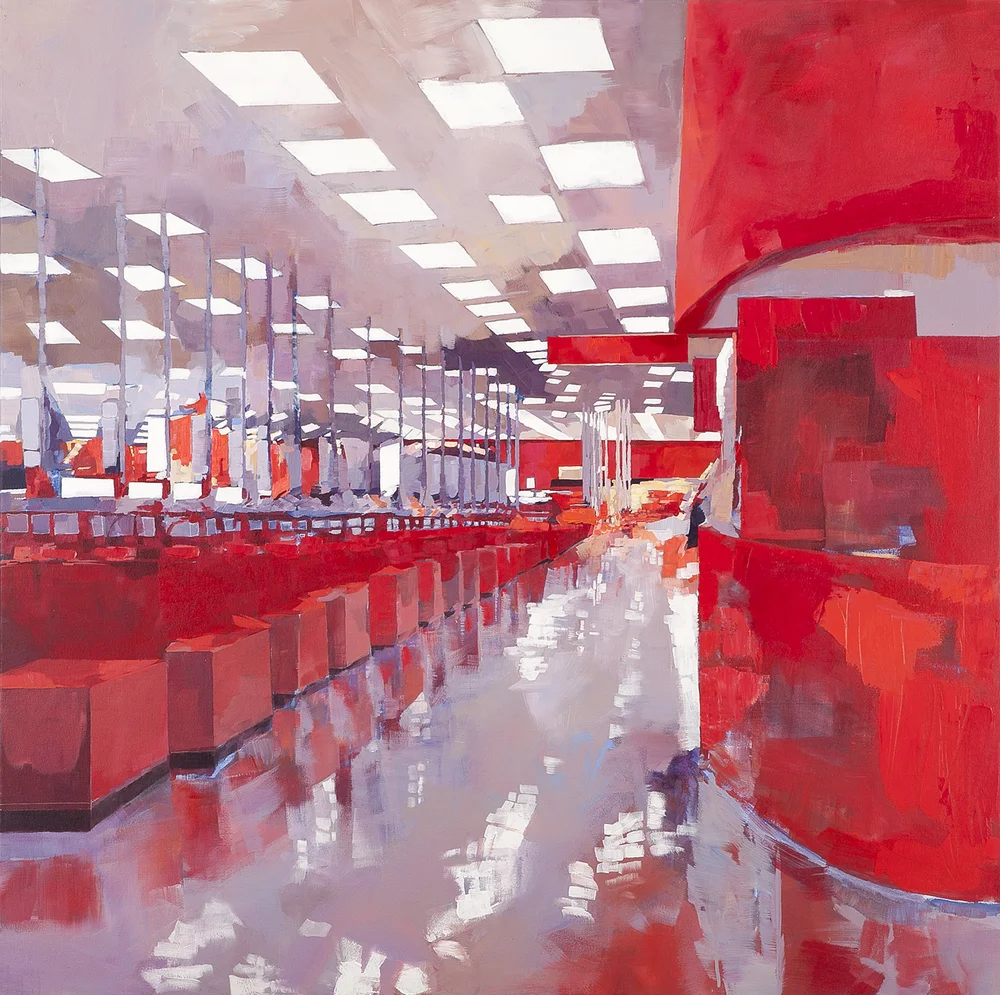
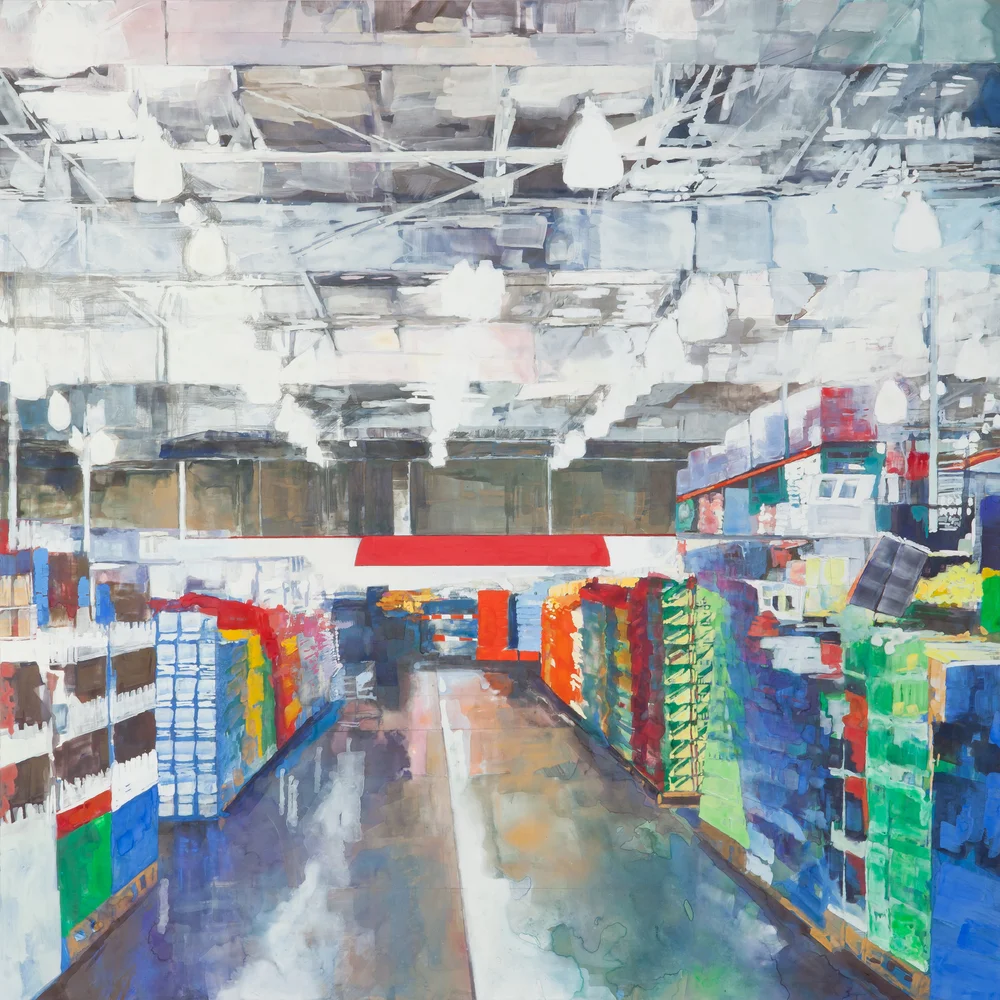
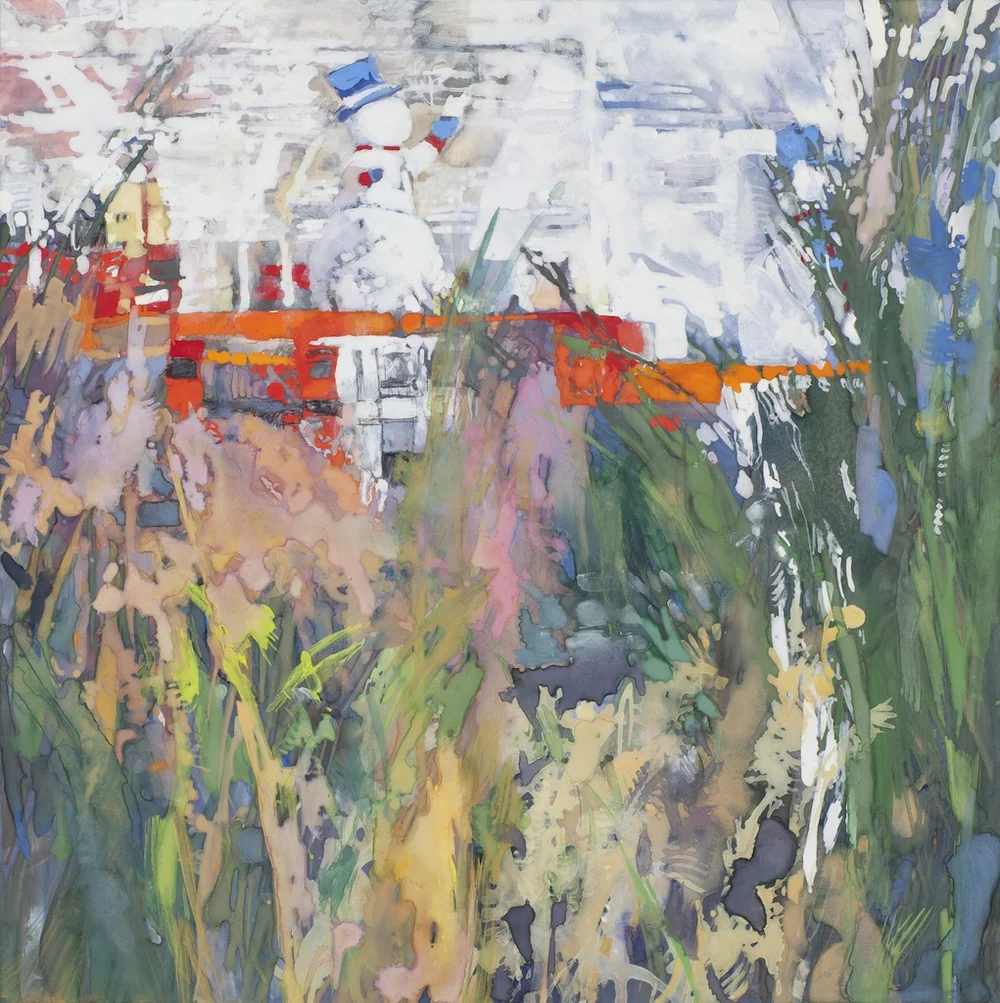
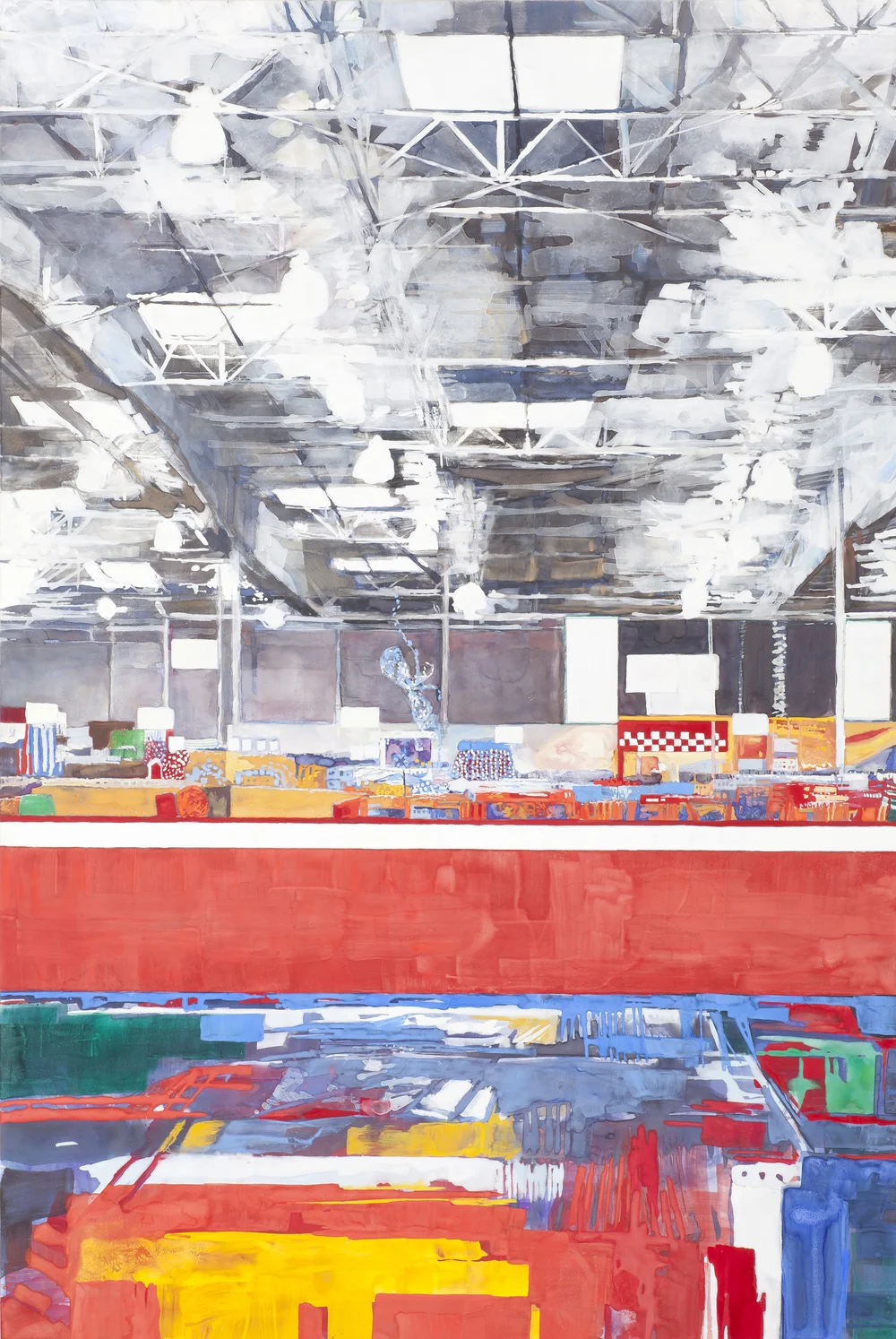
“Cathedrals of Desire” investigates the experience of the repulsion and seduction of the American landscape. The paintings of big box stores are intended to elicit fear and awe at the vast American consumer landscape. This body of work incorporates the landscape painting tradition with the adopted Sublime of the influences of Bierstadt and Manifest Destiny that has become an overriding element of American identity. This is also reflective of the contemporary as well as historical implications of what those ideals of Manifest Destiny and consumerism represent.
Muldrow applies philosophical ideas to American landscape painting, using historical precedents and imbuing the contemporary experience to reach an understanding of America. In this body of work, the contemporary is an important factor. Muldrow’s goal is to isolate that interstitial moment when the critical interpretation of an interior space becomes the emotional experience of landscape. Searching for that moment when the assessment of information succumbs to the overwhelmed state of emotions and when the cultural critique becomes an experience independent of the imagery.
The embrace of the Sublime is inspired by the theories of Edmund Burke’s treatise on the Sublime and its relationship with terror. This, paired with the concept of the divine power of the Sublime, heavily influenced the depiction of these consumer spaces as Cathedrals of Desire. These environments represent not only the actual structural space and overwhelming chaos of goods, but also the psychology and vernacular of American consumerism. The obtrusive massive structures built with no attempt at aesthetic beauty reveal the most naked of American consumer desires. Cathedrals of Desire is an attempt to respond to this landscape by obviating the contrast between the mundane and the dramatic; the absurd experience of both comfort and the profane.
A reference point is Thomas Cole’s painting “Oxbow.” His intent in “Oxbow” was to protest the loss of the wilderness in North America, yet to the viewer today, the dramatic wild vista and the beautiful pastoral farmland reads as a romantic beautiful landscape. When does that moment come when an emotional state overrides the critical and the critical is no longer part of the dialogue? Muldrow paints that moment.